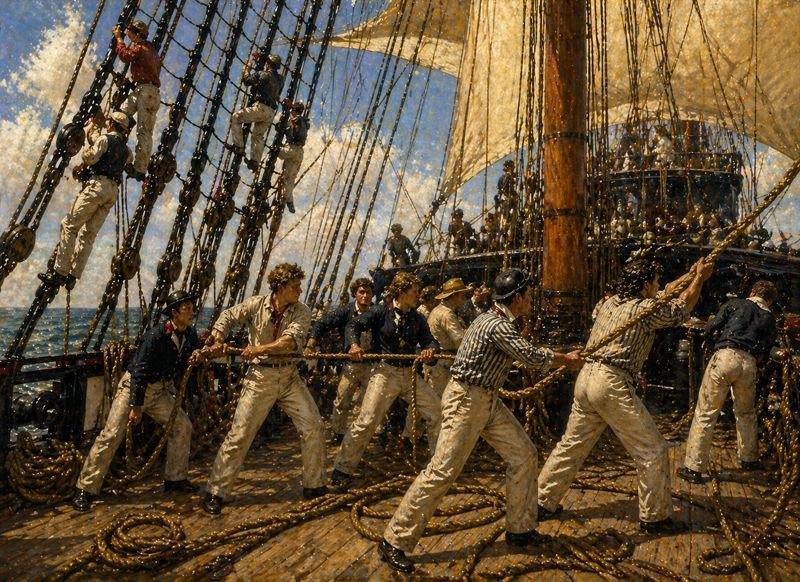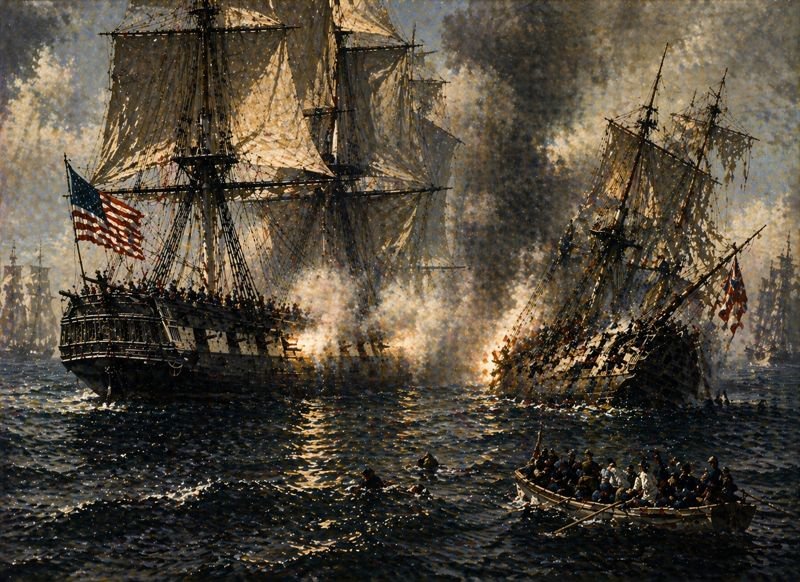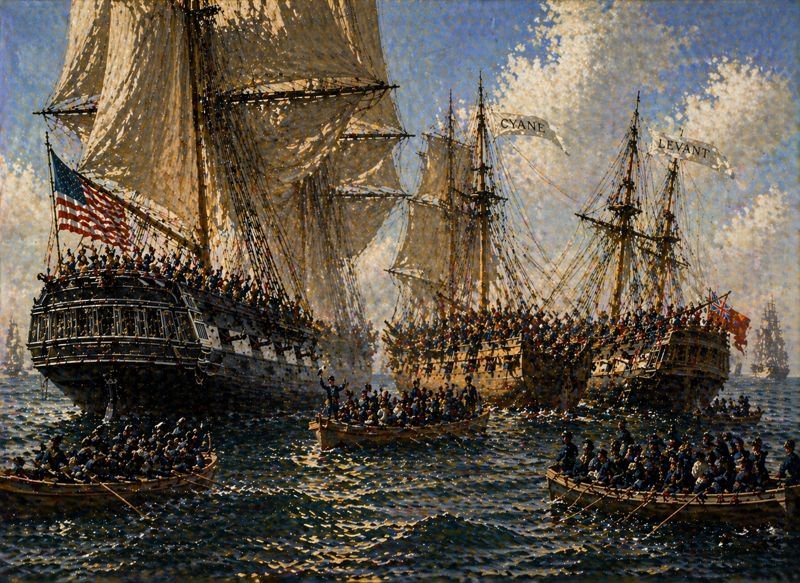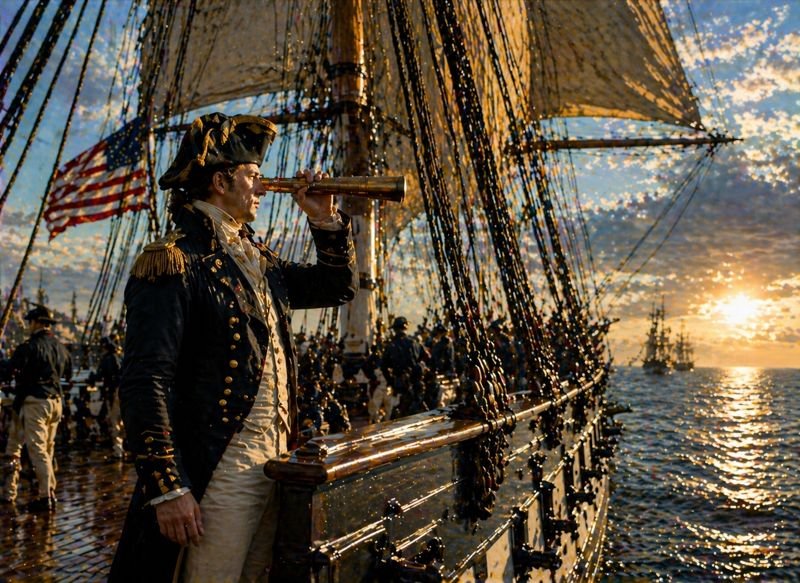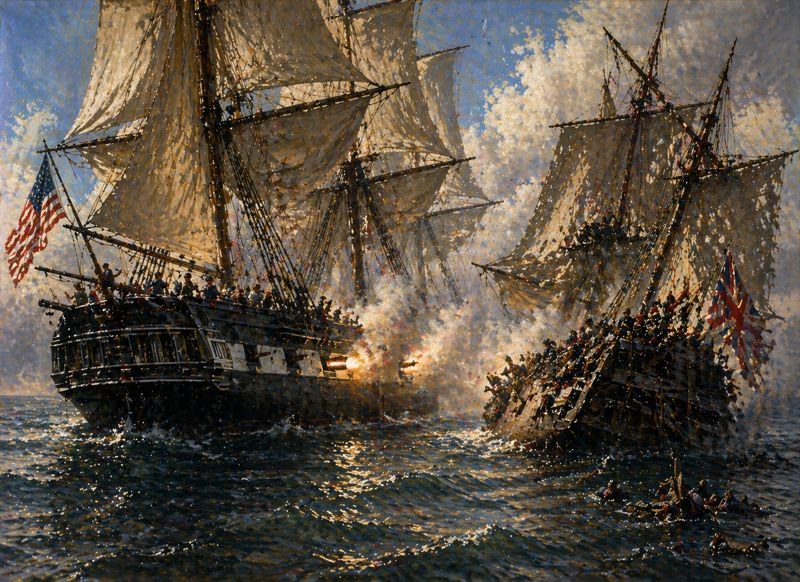
The United States Marine Corps maintained a close and enduring relationship with USS Constitution throughout its operational life. From the ship’s earliest voyages in the late 1790s through its most famous battles in the War of 1812, Marines were an integral part of the crew, serving as both combat troops and a disciplined force that reinforced order aboard the vessel.
The presence of Marines on naval ships dates back to European traditions, where specialized soldiers were stationed at sea to provide security, enforce discipline, and serve as a dedicated fighting force during engagements. The United States adopted this model early, and by the time USS Constitution entered service, it was standard for a detachment of Marines to be assigned to major warships. Typically, this detachment consisted of around 50 to 60 Marines, commanded by a Marine officer who operated within the ship’s broader command structure while maintaining a degree of independence over his men.
Aboard USS Constitution, Marines fulfilled several distinct roles. One of their primary responsibilities was maintaining discipline. In an environment where hundreds of sailors and crew lived and worked in close quarters under stressful conditions, the potential for disorder was always present. Marines acted as a visible and organized force that could respond to disturbances, guard prisoners, and enforce the captain’s authority. Their presence helped ensure that the chain of command was respected and that the ship functioned effectively.
In addition to this policing role, Marines were essential in combat. During naval battles, they were typically positioned in elevated locations such as the fighting tops (platforms on the masts) or along the decks. From these vantage points, they used muskets to target enemy officers, gun crews, and exposed personnel. This form of precision fire could disrupt the enemy’s ability to coordinate and fight effectively. By picking off key individuals, Marines contributed to the overall success of the ship’s offensive actions.
Marines also played a role in boarding actions, a common tactic in naval warfare of the period. When ships closed in on one another, crews might attempt to board and capture the opposing vessel. In these moments, Marines were often at the forefront, using their training as soldiers to engage in close combat. Their discipline and organization gave them an advantage in these chaotic encounters, where coordination and force could determine the outcome.
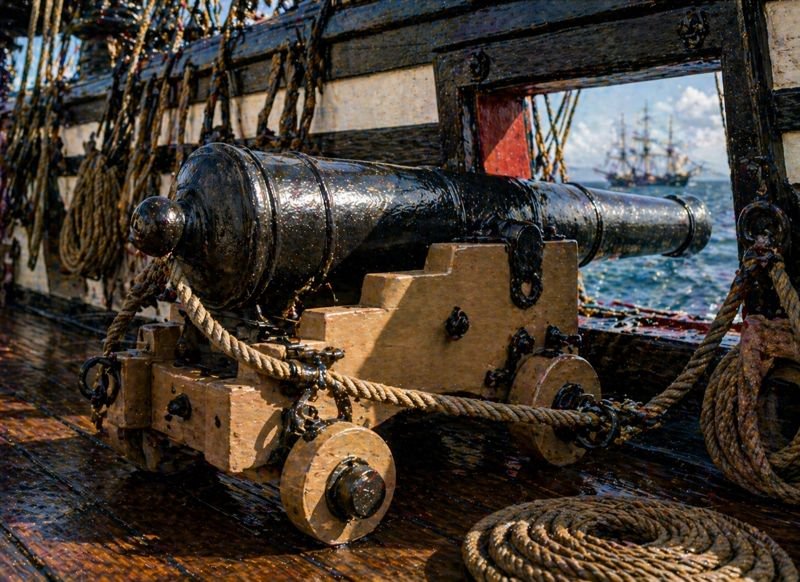
The effectiveness of Marines aboard USS Constitution was demonstrated in several notable engagements. During battles against British frigates, their ability to provide accurate musket fire and maintain order under pressure contributed to the ship’s success. Whilst much attention is given to the ship’s powerful cannons and strong construction, the role of the Marines highlights the human element behind these victories. The coordination between sailors operating the guns and Marines providing covering fire created a combined force that was greater than the sum of its parts.
Life for Marines aboard USS Constitution shared many similarities with that of the sailors, but there were also important differences. Marines were trained as soldiers first and foremost, and their routines included drills, inspections, and duties related to their specialized roles. They were typically quartered separately from the sailors when space allowed, reinforcing their distinct identity within the crew. Their uniforms, discipline, and chain of command set them apart, even as they worked closely with the rest of the ship’s company.
The relationship between Marines and sailors was both cooperative and hierarchical. While Marines supported the overall mission of the ship, their role in enforcing discipline could sometimes create tension. However, in battle and during demanding situations at sea, mutual dependence often outweighed these differences. Both groups relied on one another for survival and success, fostering a sense of shared purpose.
The presence of Marines aboard USS Constitution also reflected the broader development of the United States as a maritime power. Their role demonstrated an understanding of the need for specialized training capable of operating in both naval and land-based contexts. This dual capability would become a defining feature of the Marine Corps, contributing to its identity as a flexible and highly adaptable force.
In a historical sense, the Marines aboard USS Constitution were part of the foundation upon which the modern Marine Corps was built. Their service during the ship’s early years helped establish traditions of discipline, professionalism, and combat effectiveness that continue to define the organization today. The relationship between the United States Marines and USS Constitution was one of integration and mutual reliance. The ship provided the platform, but it was the combination of sailors and Marines that made it an effective fighting unit. The Marines’ roles in maintaining order, providing combat skills and supporting naval operations were essential to the ship’s success and enduring legacy.