USS Constitution Books

A Call To Sea

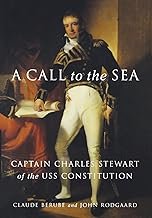
A Call to the Sea: Captain Charles Stewart of the USS Constitution is a detailed and engaging biography that explores the life and naval career of Charles Stewart, one of the most accomplished commanders of USS Constitution. Written by naval historian Tyrone G. Martin, the book provides both a personal portrait of Stewart and a broader look at the early development of the United States Navy.

The narrative traces Stewart’s journey from his early years at sea to his rise as a respected naval officer. Martin places particular emphasis on Stewart’s leadership style, highlighting his combination of discipline, tactical awareness, and independence—qualities that would define his command of USS Constitution during the later stages of the War of 1812. The book does an excellent job of situating Stewart within the wider context of naval warfare at the time, showing how his decisions reflected both the opportunities and constraints faced by American commanders.

One of the strengths of A Call to the Sea is its detailed account of Stewart’s most famous engagement: the capture of HMS Cyane and HMS Levant in 1815. Martin carefully reconstructs the battle, illustrating Stewart’s ability to manage a complex, multi-ship engagement with precision and confidence. This section of the book stands out for its clarity and attention to detail, making it accessible to both general readers and those with a deeper interest in naval history.

Beyond combat, the book also explores Stewart’s long career in the navy, including his contributions to its postwar development. Martin portrays him as a figure who not only excelled in battle but also helped shape the professional standards of the service.

Overall, A Call to the Sea is a well-researched and compelling biography that offers valuable insight into both Charles Stewart and the enduring legacy of USS Constitution.
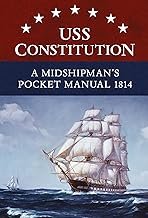
Midshipman's Pocket Manual

USS Constitution: A Midshipman's Pocket Manual 1814 offers a fascinating glimpse into life aboard USS Constitution during the height of the War of 1812. Rather than a conventional narrative history, this work recreates the kind of compact reference guide a young naval officer—or midshipman—might have carried at sea, making it both immersive and practical in its approach.

The book is structured as a period-style manual, covering essential aspects of seamanship, navigation, gunnery, discipline, and shipboard routines. It reflects the expectations placed on junior officers in the early U.S. Navy, who were required to master a wide range of technical and leadership skills while operating in demanding and often dangerous conditions. Through its concise entries and instructional tone, the manual brings readers closer to the daily realities of naval service in the age of sail.

One of the most compelling aspects of the book is how it situates the reader within the working environment of USS Constitution. It provides insight into how orders were given, how guns were handled in combat, and how the ship’s crew functioned as a coordinated unit. This makes it particularly valuable for understanding not just the ship’s famous battles, but the discipline and preparation that made those victories possible.

The manual also highlights the broader culture of the early American navy, emphasizing duty, precision, and professionalism. It illustrates how midshipmen were trained to think independently whilst adhering to strict command structures—an essential balance in naval warfare.

Overall, USS Constitution: A Midshipman’s Pocket Manual 1814 is an engaging and informative work that blends historical authenticity with practical detail. It serves as both an educational resource and a unique window into the operational life of one of America’s most famous warships.

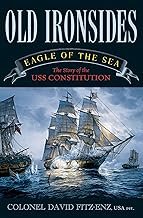
Eagle Of The Sea

Old Ironsides: Eagle of the Sea: The Story of the USS Constitution is a detailed and research-driven account of one of America’s most famous warships, USS Constitution. The book attempts to go beyond a simple narrative of battles and instead provides a broad, almost encyclopedic exploration of the ship, its context, and the naval world in which it operated.

One of the defining features of the book is its scope. Rather than focusing solely on the dramatic engagements of the War of 1812, Fitz-Enz examines the origins of the ship, including the political and strategic conditions that led to the creation of the U.S. Navy. The book explores shipbuilding techniques, naval design, and the practical realities of operating a sailing warship, giving readers a deeper understanding of how USS Constitution functioned and why it was so effective.

A notable aspect of the work is its inclusion of technical and contextual material. The author discusses topics such as navigation, rigging, and the broader theories of sea power, offering insight into the environment in which early American naval officers operated. This makes the book particularly valuable for readers who want more than just a story of battles, as it situates the Constitution within the larger framework of naval history and strategy.

At the same time, the book does cover the ship’s most famous moments, including its victories over British warships and its role in establishing American naval credibility. However, these events are often presented alongside official reports and detailed descriptions, giving the narrative a more documentary tone.

Another strength of the book is its attention to the ship’s long life beyond wartime service. It follows USS Constitution through its later missions, preservation efforts, and enduring legacy as a national symbol. This broader perspective helps readers appreciate not only the ship’s military achievements but also its cultural and historical significance.

Overall, Old Ironsides: Eagle of the Sea is a comprehensive and information-rich work that will appeal most to readers interested in the technical and contextual aspects of naval history. Whilst it may be less focused on dramatic storytelling, it offers a deep and valuable understanding of USS Constitution and the world in which it sailed.

A Day In The Life

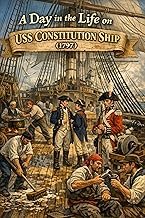
A Day in the Life on the USS Constitution Ship (1797): Life, Duty, and Courage Aboard America’s Legendary Naval Frigate presents an immersive, narrative-driven exploration of everyday life aboard USS Constitution during its early years. Rather than focusing solely on major battles or famous commanders, the book reconstructs a typical day at sea, offering readers a grounded and human perspective on naval service in the late 18th century.

The strength of the book lies in its vivid portrayal of routine. It walks the reader through the rhythms of shipboard life, from the division of the crew into watches to the constant cycle of labor that kept the ship operational. Sailors are shown hauling rigging, maintaining sails, cleaning decks, and preparing for potential combat at any moment. This emphasis on routine highlights an important truth: the effectiveness of a warship depended not just on its design or weapons, but on the discipline and coordination of its crew.

The book also explores the hierarchy aboard USS Constitution, illustrating how officers, warrant officers, and enlisted men interacted within a strict chain of command. Young midshipmen, in particular, are portrayed as learning their craft in a demanding environment where both technical skill and leadership were expected. This reflects the broader culture of the early U.S. Navy, which placed heavy emphasis on responsibility and initiative.

Another compelling aspect is its depiction of living conditions. Food, often consisting of salted meat, hardtack, and simple rations, was basic and repetitive, whilst cramped sleeping arrangements and limited privacy defined daily life. Yet the book balances these hardships with moments of camaraderie and shared purpose, showing how crews developed strong bonds under difficult circumstances.

Ultimately, A Day in the Life on the USS Constitution Ship (1797) offers a richly detailed and accessible look at naval life. By focusing on ordinary experiences rather than extraordinary events, it deepens understanding of how “Old Ironsides” functioned as a living, working warship.

National Tour

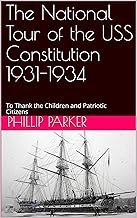
The National Tour of the USS Constitution: To Thank the Children and Patriotic Citizens explores one of the most unique chapters in the long life of USS Constitution, its nationwide tour during the early 1930s. The book focuses on the ship’s journey across the United States as both a gesture of gratitude and a powerful act of public engagement, connecting Americans directly with their naval heritage.

The central theme of the book is the 1931–1934 national tour, which was organized after a major restoration effort funded in large part by donations from schoolchildren and patriotic citizens. In response to this public support, the U.S. Navy sent USS Constitution on a multi-year voyage to bring the historic ship to communities across the country. The tour lasted more than three years, visited dozens of ports, and attracted millions of visitors eager to see “Old Ironsides” in person .

The book highlights how the tour functioned as both a symbolic and educational mission. At a time when the United States was facing the hardships of the Great Depression, USS Constitution became a unifying national icon. Crowds gathered in every port, not only to see a famous warship but to reconnect with a shared sense of history and identity. The ship’s presence served as a reminder of earlier संघर्ष and resilience, offering inspiration during a difficult period.

Another important aspect of the book is its attention to logistics and planning. The tour required careful coordination, including towing the ship between ports, maintaining its condition, and managing the large numbers of visitors who came aboard. These practical details add depth to the narrative, showing that the tour was not only symbolic but also a complex operational undertaking.

The work also emphasizes the relationship between the public and the ship. USS Constitution’s survival into the 20th century was not guaranteed, and the restoration campaign that preceded the tour reflected widespread public support. By bringing the ship directly to the people, the Navy acknowledged that connection and reinforced the idea that the vessel belonged to the nation as a whole.

Overall, The National Tour of the USS Constitution is both a historical account and a reflection on national memory. It shows how a warship once defined by combat could take on a new role as an ambassador of history, education, and unity, ensuring that its legacy remained alive for future generations.

44 Gun Frigate

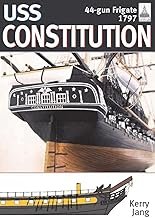
USS Constitution, 44-gun frigate, 1797: ShipCraft Series No 34 is a highly detailed and visually rich guide that blends naval history with practical modeling expertise, offering a unique perspective on USS Constitution. Written by ship modeler and author Kerry Jang, the book is part of the well-regarded ShipCraft series, which focuses on helping enthusiasts understand, build, and accurately represent historic warships.

One of the book’s key strengths is its structured approach. It begins with a concise but informative historical overview of USS Constitution, covering its origins under the Naval Act of 1794, its early service, and its famous role in the War of 1812. This section provides essential context, allowing readers to understand why the ship became such an enduring symbol of American naval power.

The core of the book, however, lies in its focus on the ship’s appearance and evolution. USS Constitution underwent numerous changes over its long service life, and the book carefully examines these differences, including variations in paint schemes, rigging, and structural features. This attention to detail is particularly valuable because many commonly seen representations of the ship are based on later restorations rather than historically accurate configurations.

Another major component is the modeling section, which sets this book apart from traditional naval histories. It provides in-depth guidance on building and improving scale models of USS Constitution, including reviews of available kits, advice on modifications, and detailed explanations of rigging and finishing techniques. The book also includes a photographic gallery of completed models, offering both inspiration and practical reference for modelers.

Visually, the book is packed with line drawings, color profiles, and photographs, making it an invaluable reference for anyone interested in the ship’s design and construction. This emphasis on visual material reflects the broader aim of the ShipCraft series: to combine historical accuracy with hands-on application.

Overall, USS Constitution, 44-gun frigate, 1797 is more than just a guide for model builders, it is a comprehensive reference that deepens understanding of “Old Ironsides.” It will appeal not only to hobbyists but also to readers interested in the technical and visual history of one of America’s most famous warships.