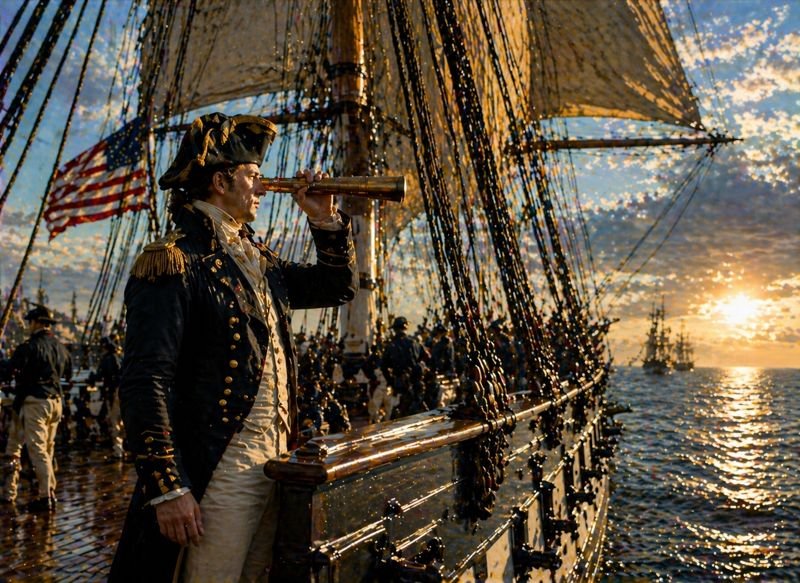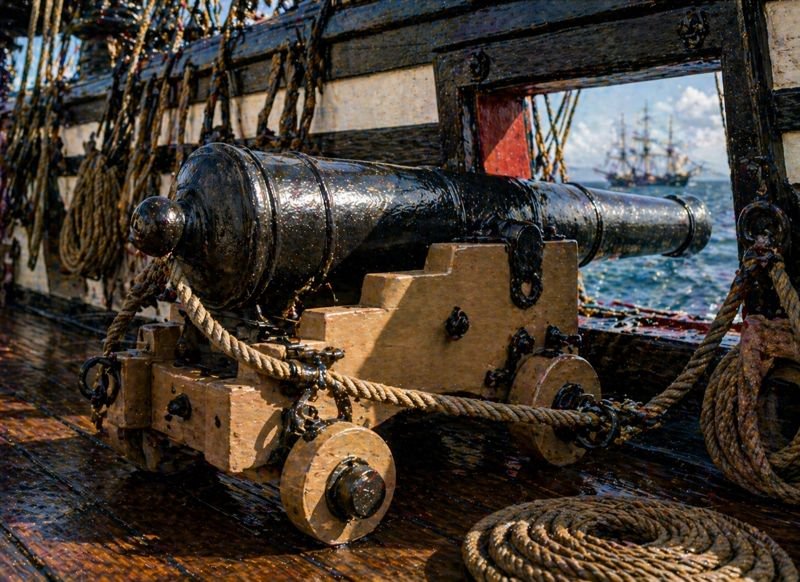
The USS Constitution’s defeat of HMS Java on December 29th, 1812, was another decisive and celebrated victory during the War of 1812. Coming just months after its triumph over HMS Guerriere, the battle reinforced the reputation of the Constitution as one of the most formidable warships of its era and demonstrated the effectiveness of American naval design, leadership, and crew discipline.
The engagement took place off the coast of Brazil in the South Atlantic. The USS Constitution, now under the command of William Bainbridge, was on a long-range cruise aimed at disrupting British shipping and asserting American naval presence far from home waters. HMS Java, commanded by Captain Henry Lambert, was escorting a convoy and carrying important personnel and dispatches to British forces in India. Although Java was rated as a 38-gun frigate, it was newly commissioned and had a relatively inexperienced crew, many of whom had not yet fully trained together.
As the two ships sighted each other, both captains prepared for battle. Bainbridge maneuvered to bring USS Constitution into a favorable position, whilst Lambert sought to close the distance and engage aggressively. Early exchanges of fire began at range, but like many naval battles of the period, the decisive action occurred when the ships moved closer together.
The USS Constitution held several advantages going into the fight. Its heavier construction and powerful armament, particularly its 24-pounder long guns, gave it a stronger broadside than HMS Java, which was equipped with lighter 18-pounders. Additionally, the Constitution’s crew was more experienced, having already proven themselves in combat earlier in the war.
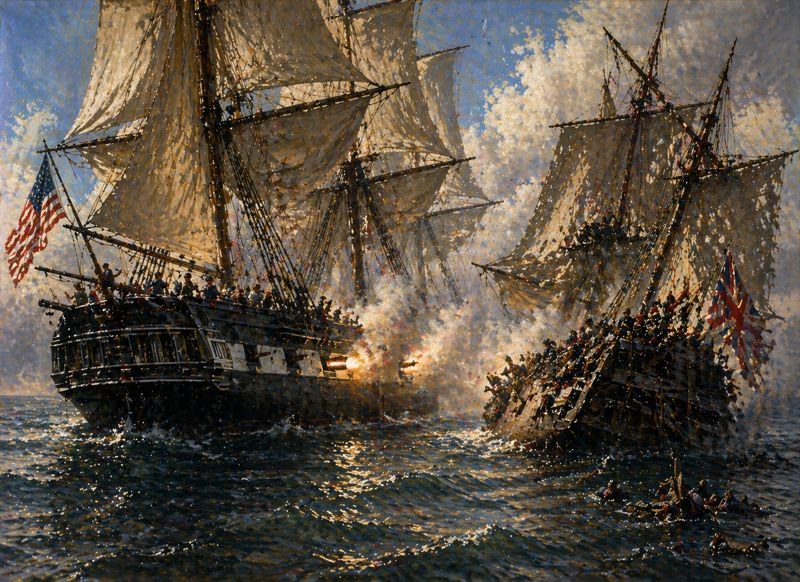
The battle quickly became intense and destructive. Both ships exchanged heavy broadsides, with masts, rigging, and hulls taking significant damage. At one point early in the engagement, Captain Bainbridge himself was wounded, yet he continued to command the ship, maintaining control and directing the action despite his injury. This leadership under pressure helped sustain the crew’s effectiveness throughout the fight.
A key element of USS Constitution’s success was its ability to target HMS Java’s rigging and masts. By focusing fire on these, the American gunners systematically reduced the British ship’s ability to maneuver. One by one, Java’s masts were brought down, leaving it increasingly helpless. Without effective sails, the ship could no longer position itself to fight back or escape. At the same time, USS Constitution demonstrated its durability once again. Although it sustained damage, including to its rigging and spars, its hull easily absorbed much of the enemy fire without catastrophic failure. This allowed the American ship to remain fully engaged while continuing to deliver powerful broadsides.
As the battle progressed, HMS Java was reduced to a shattered state. Its crew fought with determination, but the loss of masts and the damage to its structure made continued resistance increasingly futile. The Constitution maintained its position and continued firing, ensuring that the British ship could not recover or regain control of the engagement.
Eventually, Captain Lambert was mortally wounded, and with the ship no longer capable of effective combat, HMS Java struck its colors, signaling surrender. The victory was decisive. Like HMS Guerriere before it, Java was too badly damaged to be saved. After removing prisoners and useful materials, USS Constitution set the ship ablaze, leading to its destruction.
The defeat of HMS Java had significant implications. It reinforced the earlier victory over Guerriere, proving that the first success had not been a fluke. Instead, it confirmed that USS Constitution’s design and crew gave it a consistent advantage over standard British frigates. These victories challenged the long-held belief in the invincibility of the Royal Navy and demonstrated that American ships could compete effectively on the international stage.
The battle also highlighted the importance of training, coordination, and tactical focus. USS Constitution’s crew operated with discipline and precision, executing orders efficiently and maintaining pressure on the enemy. The deliberate targeting of masts and rigging showed a clear understanding of how to disable an opponent without necessarily destroying it outright.
For the United States, the victory provided another boost to national morale during a difficult war. It strengthened confidence in the navy and underscored the value of investing in high-quality ships and skilled crews. For Britain, the loss was a reminder that even a dominant naval power could face serious challenges from well-designed and well-commanded vessels.
In the broader context of the War of 1812, the defeat of HMS Java contributed to a series of American naval successes that balanced setbacks on land. These victories helped shape the narrative of the war and ensured that the U.S. Navy played a prominent role in its history. The battle between USS Constitution and HMS Java stands as a testament to the effectiveness of American naval innovation and training. It demonstrated that a combination of strong design, experienced crews, and sound tactics could produce decisive results, even against a powerful and established adversary.