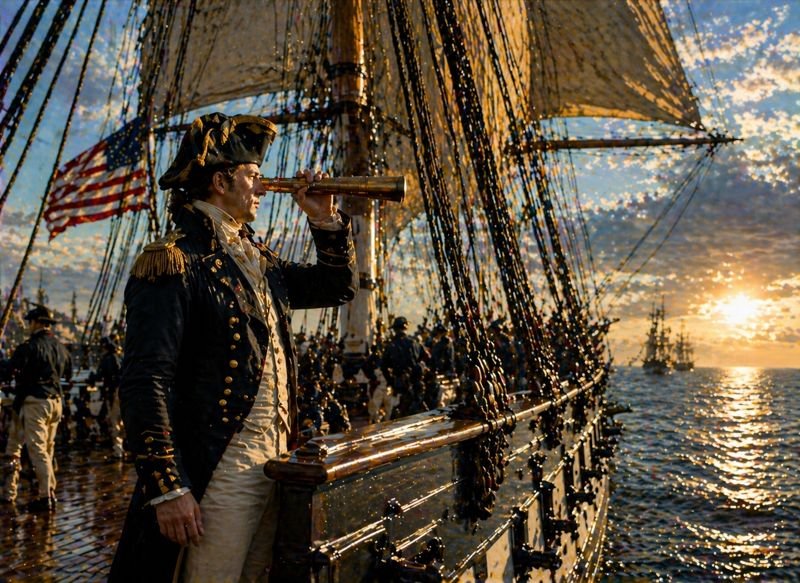
The USS Constitution owed much of its battlefield advantage in the early 19th century to the heavy long guns it carried, most notably 24-pounders, at a time when many British frigates were armed primarily with 18-pounders. This difference in armament was not just a matter of numbers; it reflected deeper contrasts in naval design, doctrine, and strategic priorities between the United States and the Royal Navy during the War of 1812.
The most immediate advantage of the 24-pounder gun was simple physics. A heavier shot carried greater kinetic energy, which translated into more destructive impact on enemy hulls, rigging, and crew. At typical engagement ranges, often relatively close in frigate combat, a 24-pound ball could smash through wooden planking more effectively than an 18-pounder, causing splintering damage that was deadly to personnel and structurally damaging to ships. This meant that USS Constitution could inflict serious harm with fewer well-aimed broadsides, while also being more likely to disable an opponent quickly.
Range and penetration were also important. Although both types of guns were effective at close range, the heavier 24-pounders retained more energy over distance. This gave Constitution the flexibility to engage earlier or maintain an advantage as ships closed. In practice, American captains often preferred to close the range before firing, but the heavier guns still provided a margin of superiority once combat began.
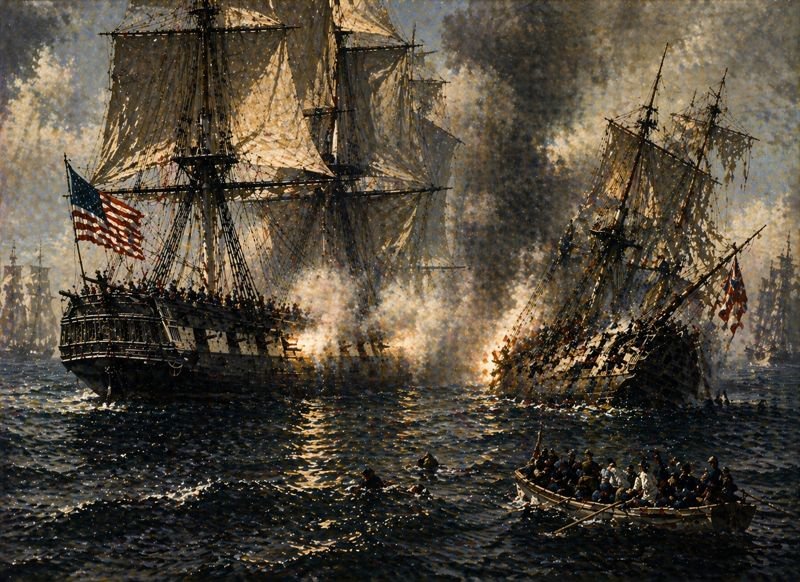
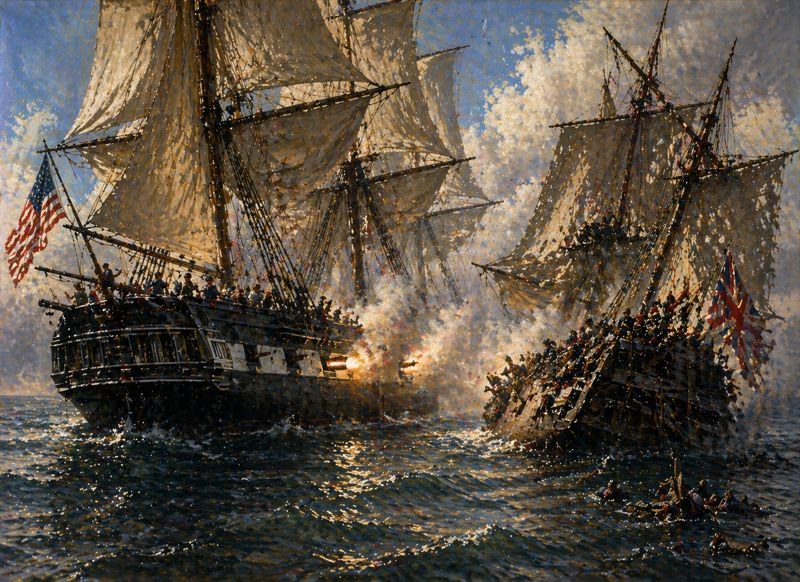
Another key factor was the overall weight of the broadside. The USS Constitution’s main battery of 24-pounders meant that each side of the ship could deliver a significantly heavier attack than a typical British 18-pounder frigate. When combined with additional carronades on the upper deck, the total firepower of the American ship could overwhelm an opponent in a relatively short period of time. This was clearly demonstrated in battles such as the defeat of HMS Guerriere, where the heavier American guns caused rapid and decisive damage.
However, these advantages came with trade-offs. 24-pounder guns were heavier, requiring a larger and stronger ship to carry them effectively. They also demanded more crew to operate and placed greater strain on the ship’s structure. This is where the design of USS Constitution, with its larger hull and sturdier construction, was crucial. The ship had been specifically built to handle these heavier weapons, allowing it to combine firepower with durability.
The question then arises: why did the Royal Navy not simply upgrade its frigates to carry 24-pounders as well? The answer lies in the scale, strategy, and operational demands of the British Navy. The Royal Navy was a global force with hundreds of ships, tasked with maintaining blockades, protecting trade routes, and fighting large fleet actions. Standardization was essential. The 18-pounder frigate represented a balanced design; fast, maneuverable, and sufficiently armed for most tasks. It was versatile and economical, making it suitable for widespread use across the empire.
Upgrading to 24-pounders would have required redesigning ships to accommodate the additional weight and structural demands. This would have increased costs, reduced speed in some cases, and limited the number of ships that could be built and maintained. For a navy operating on a global scale, these trade-offs were significant. The British preferred a large number of reliable, standardized frigates rather than a smaller number of heavier, more specialized vessels.
There was also a doctrinal element. British naval strategy emphasized fleet actions and the use of ships of the line for decisive battles. Frigates were primarily used for scouting, escort, and independent operations rather than head-to-head combat with heavily armed opponents. In this context, the 18-pounder frigate was considered sufficient. Encounters with ships like USS Constitution, which were effectively “super-frigates”, were relatively rare and not representative of typical engagements.
It is worth noting that the Royal Navy did recognize the advantages of heavier frigates over time. Later in the Napoleonic period and beyond, the British began to experiment with larger frigates carrying 24-pounders, but this shift was gradual and influenced by changing circumstances. The American approach, embodied by USS Constitution, can be seen as an early adoption of this heavier frigate concept.
In essence, USS Constitution’s superiority in armament was the result of a deliberate design choice. The United States, with a much smaller navy, focused on building a few highly capable ships that could outperform standard frigates. This strategy allowed American vessels to achieve notable successes despite being outnumbered overall.
The contrast between 24-pounders and 18-pounders highlights the broader differences between the two navies. The United States emphasized power and strength in individual ships, whilst Britain prioritized quantity, flexibility, and global reach. In one-on-one encounters, this gave ships like USS Constitution a clear edge, but within the larger strategic picture, both approaches reflected the needs and capabilities of their respective nations.