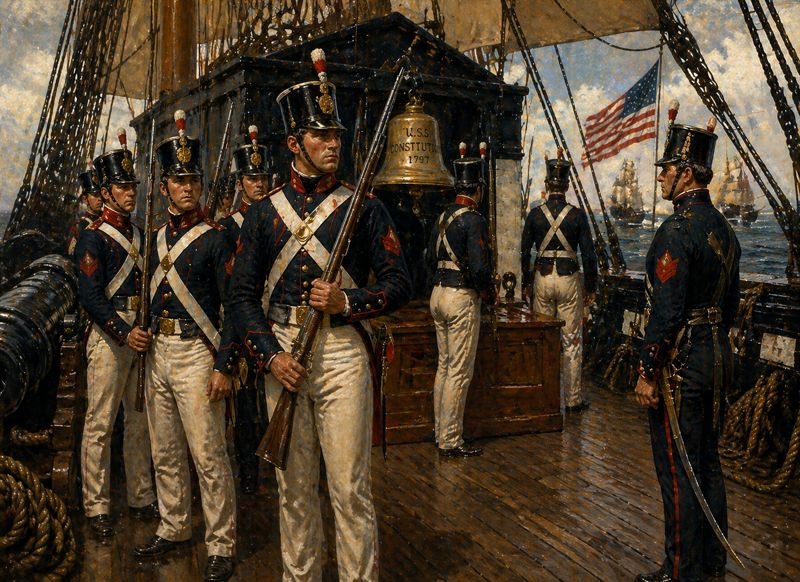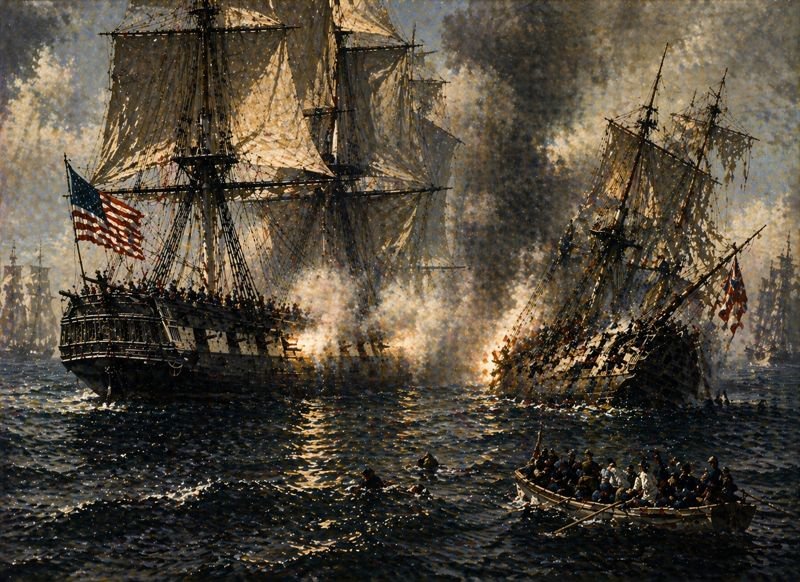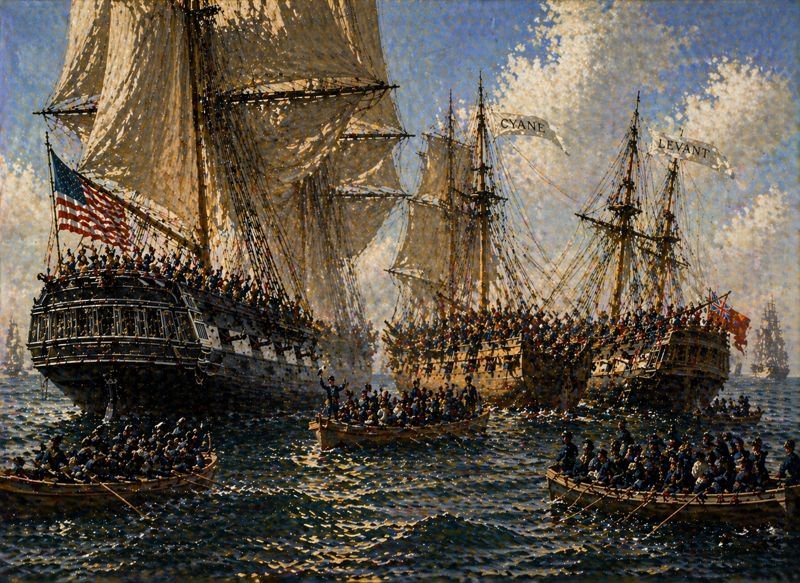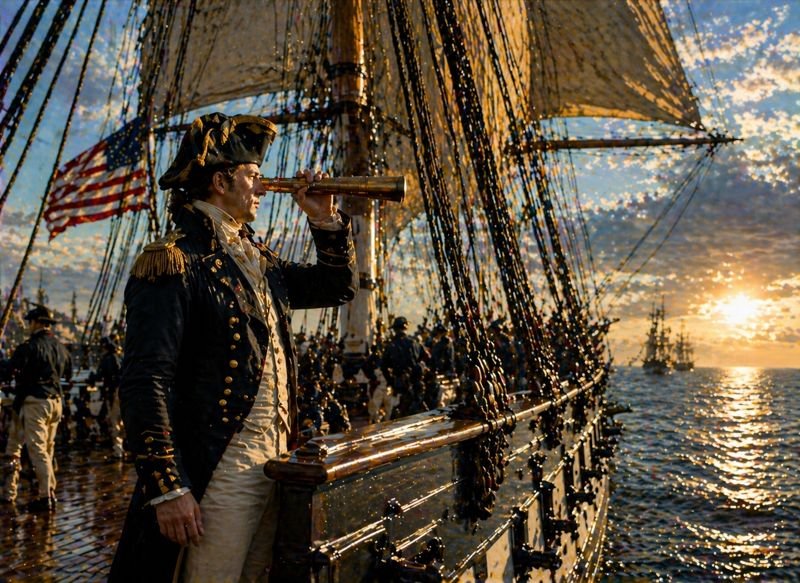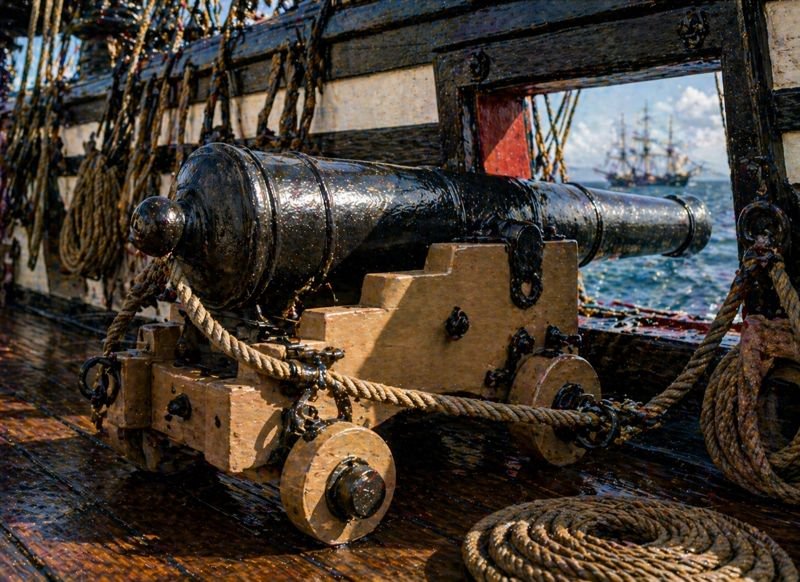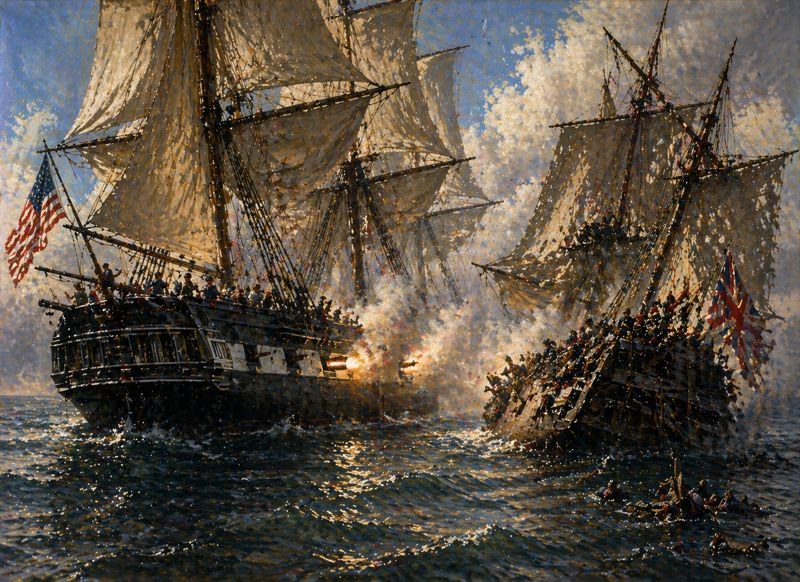
The USS Constitution was built in response to a volatile international environment and the urgent need for the young United States to protect its trade, sovereignty, and maritime interests. Its construction in the 1790s cannot be understood without examining the political, economic, and strategic challenges facing the nation in the years following independence.
After the American Revolutionary War, the United States emerged as an independent country but lacked a strong central government and, crucially, a capable navy. During the war, the Continental Navy had been disbanded, and by the mid-1780s, the country had little means to defend its shipping. American merchants, who relied heavily on overseas trade, found themselves increasingly vulnerable on the open seas.
One of the most immediate threats came from the Barbary States of North Africa, particularly Algiers, Tripoli, and Tunis. These states engaged in state-sponsored piracy, capturing merchant vessels and enslaving their crews unless tribute was paid. Without the protection of the British Royal Navy, which had previously shielded colonial shipping, American vessels became easy targets. The seizure of American sailors and ships in the Mediterranean created public outrage and highlighted the nation’s weakness in defending its interests abroad.
At the same time, tensions with European powers added to the instability. Britain and France, both dominant naval powers, were engaged in ongoing conflicts during the French Revolutionary period. American neutrality did not always protect its ships, which were often seized or harassed by both sides. The lack of a naval force left the United States unable to enforce its rights or respond effectively to these challenges.
Domestically, there was significant debate over how to address these issues. Some political leaders favored paying tribute to the Barbary States as a temporary solution, whilst others argued for building a navy capable of defending American commerce. This debate reflected broader issues about the role of federal power and the direction of the new nation. Figures such as Alexander Hamilton supported a stronger central government and the creation of a naval force, whilst others were more cautious about the costs and implications.
The turning point came with the passage of the Naval Act of 1794, which authorized the construction of six frigates. These ships were designed to be powerful, fast, and capable of outmatching most vessels of similar size. The goal was not to compete directly with the large fleets of European powers but to create a force that could protect American trade and deter aggression.
The design of these frigates, including the USS Constitution, was entrusted to naval architect Joshua Humphreys. His approach emphasized strength and durability, resulting in ships that were larger and more heavily built than typical frigates. The USS Constitution, constructed in Boston, incorporated thick live oak timbers and robust construction techniques, earning it the nickname “Old Ironsides” in later years.
The decision to build the USS Constitution also reflected the growing importance of maritime trade to the American economy. As the nation expanded its trade networks, particularly with Europe, the Caribbean, and Asia, the protection of shipping lanes became increasingly critical. A navy was seen not only as a military necessity but as an economic one, ensuring that American goods could move safely across the oceans.
Construction of the USS Constitution began in 1794 and was completed in 1797. By this time, the geopolitical situation had already begun to evolve, but the need for a naval presence remained clear. The ship would soon prove its value in conflicts such as the Quasi-War with France and the Barbary Wars, demonstrating the foresight of those who had advocated for its creation.
In a broader sense, the building of the USS Constitution marked a significant development in the development of the United States as a sovereign nation. It signaled a shift from reliance on diplomacy and tribute toward a more assertive defense of national interests. The ship became a symbol of American resilience, innovation, and independence. The context behind the construction of the USS Constitution was shaped by a combination of external threats, economic concerns, and internal debate. It was a response to the challenges of a world in which power was often measured at sea, and it reflected the determination of the United States to secure its place within this “new” world.